
Author: Mihika (Child Guidance Counsellor) | 13th December 2025

Too often we forget that ‘discipline’ really means ‘to teach’ – not ‘to punish’- Dr. Daniel J. Siegel
As a child counsellor, I find that the above quote is an eye opener. Whether it is parenting, teaching, or caregiving, generally discipline is viewed as a reaction to stop unwanted behaviour. However, it is not about control, it is about guidance. And guidance can only happen when a child feels safe enough to listen and open up enough to learn. Over the years, I have learned that correction without connection rarely brings about a meaningful change. When a child makes a mistake or misbehaves, stopping for a moment to connect first, unlocks something more powerful than compliance, it nurtures emotional safety, trust, and understanding.
Emotional Safety: The Missing Foundation of Discipline
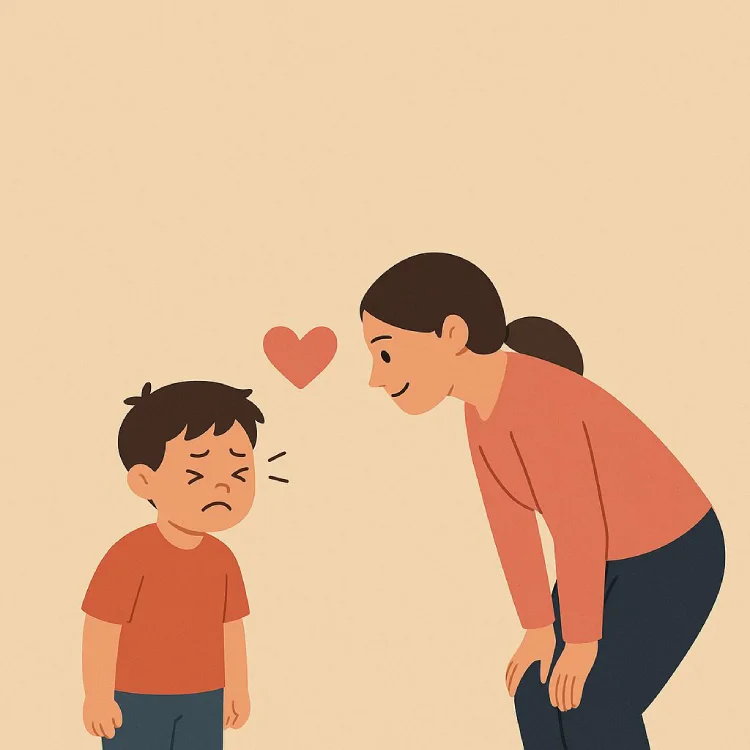
Emotional safety means a children can express their feelings, make mistakes, and still have faith in the parent or mentor, know that they are loved, respected, and understood. When this foundation is missing, the child feels they feel abandoned even if they are corrected for something very basic. From the lens of neuropsychology, when a person feels threatened, his/her brain activates the fight–flight–freeze response, shifting from a learning mode to the survival mode. The same happens with children. This is why when they are scolded or even firmly corrected without emotional connection, it often backfires. Children may obey at that moment, but internally, they disconnect -from the adult (parent, teacher or caregiver), from the lesson, and sometimes even from their own sense of worth.
Why Connection Comes First
Connection does not mean excusing poor behaviour; it means seeing the person as a whole and not judging, just the behaviour. When children feel noticed, heard and acknowledged, their emotional defences lower, allowing space for reflection and self-regulation.
The attachment theory by John Bowlby and Mary Ainsworth – one of the major theories in developmental psychology, describes secure attachment as something which allows children to explore, learn, and recover from mistakes because they know they have a safe emotional base to return to.
Research on positive and gentle discipline also supports this. Studies have shown that children who experience empathy-based discipline develop stronger emotional regulation and are more likely to internalize values rather than simply obey out of fear.1
Similarly, emerging studies on teacher- empathy demonstrate that classrooms emphasizing on emotional connection over punishment, witness improved cooperation and engagement.
Gentle discipline is neither permissive nor neglectful parenting. It does not mean ignoring limits or avoiding consequences. Instead, it means maintaining a balance between the levels of demandingness and responsiveness, and approaching discipline as a moment that respects both the child’s dignity and the adult’s responsibility. It is firm but kind, structured but empathetic.
From Control to Collaboration
As adults, we often feel responsible for ‘managing’ a child’s behaviour; but when the goal shifts from control to collaboration, everything changes.
Some strategies that can help:
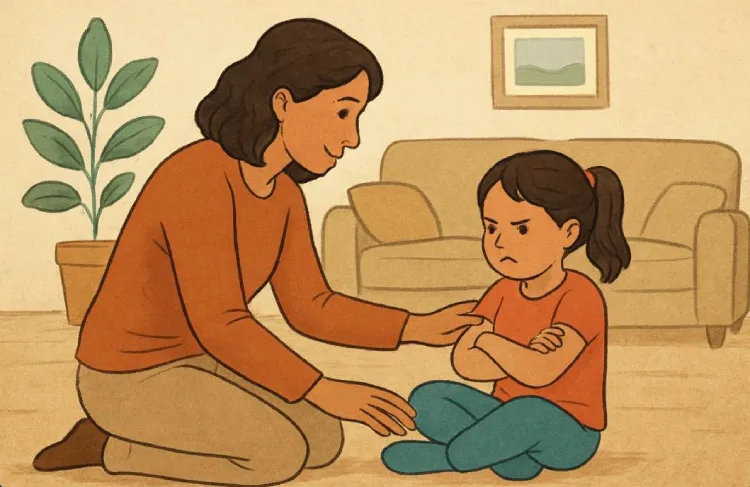
- Get down to the child’s eye level and use a calm tone.
- Acknowledge what they are feeling: “You seem upset that playtime ended.”
- Ask for their perspective: “What happened just now?”
- Offer choices when possible
- Follow with guidance: “I understand you were having fun, but it’s time to pack up. Let’s do it together.”
These approaches don’t weaken discipline – they strengthen it, because they teach responsibility through relationship.
A Reflection
Even as adults when a colleague or friend points out a mistake gently, we reflect and change. However, when correction comes with blame or humiliation, we instinctively defend ourselves. Children are no different – only smaller, more vulnerable versions of us, still learning to manage emotions.
So the next time a child misbehaves, pause. Take a breath. Look beyond the behaviour and see the need, because the goal of discipline is not to control a child’s behaviour for the moment, but to help them understand themselves for a lifetime.
Before you correct, connect – because only through connection does correction truly teach.
References:
- Meng, K., Yuan, Y., Wang, Y., Liang, J., Wang, L., Shen, J., & Wang, Y. (2020). Effects of parental empathy and emotion regulation on social competence and emotional/behavioral problems of school-age children. Pediatric investigation, 4(2), 91–98. https://doi.org/10.1002/ped4.12197
Ampofo, J., Bentum-Micah, G., Xusheng, Q., Sun, B., & Mensah Asumang, R. (2025). Exploring the role of teacher empathy in student mental health outcomes: a comparative SEM approach to understanding the complexities of emotional support in educational settings. Frontiers in psychology, 16, 1503258. https://doi.org/10.3389/fpsyg.2025.1503258